Blog Details
Where Every Strand of Parali Carries a Story:
"Sometimes, the most meaningful innovations don't begin in laboratories—they begin in villages, with people willing to try something new."When I first started working in Dalamwala village, the goal wasn't simply to create products from Parali. It was to understand whether a material that had long been considered agricultural waste could become a source of livelihood, creativity, and dignity for rural women. There was no fixed roadmap. Every day brought new questions, new experiments, and new learnings.
The Kaushal Kendra in Dalamwala gradually became a space where these questions turned into possibilities. Women from the village came together, not just to learn a new craft, but to explore a completely different way of looking at a familiar material. The same Parali that was once cleared from fields after harvest slowly began finding its place on worktables, where every fibre held the promise of becoming something meaningful.
As a Product Designer, I often found that the biggest design challenge wasn't the product—it was designing a process that felt familiar and comfortable for the women.
Rather than introducing complex manufacturing methods, we looked closely at the skills the women already possessed. Braiding, twisting, weaving, tying, and working patiently with their hands had always been a part of their daily lives. By building our processes around these familiar movements, learning became less intimidating and much more enjoyable. Design was no longer about teaching something completely new—it was about discovering new possibilities within existing knowledge.
The journey was never about getting everything right the first time. Every prototype taught us something. Some braids were too loose, some forms couldn't hold their shape, and some products required repeated refinements before they were ready. Yet every challenge became an opportunity to improve together. Ideas flowed naturally between designers, trainers, and the women themselves, creating a truly collaborative process where every voice mattered.
Gradually, bundles of Parali started transforming into handcrafted products that reflected both innovation and tradition. Braided products, pen stands, decorative articles, rope-based crafts, Parali Mache explorations, home décor, and lifestyle accessories emerged through continuous experimentation. Each finished product represented not just craftsmanship, but countless hours of patience, discussion, and collective problem-solving.
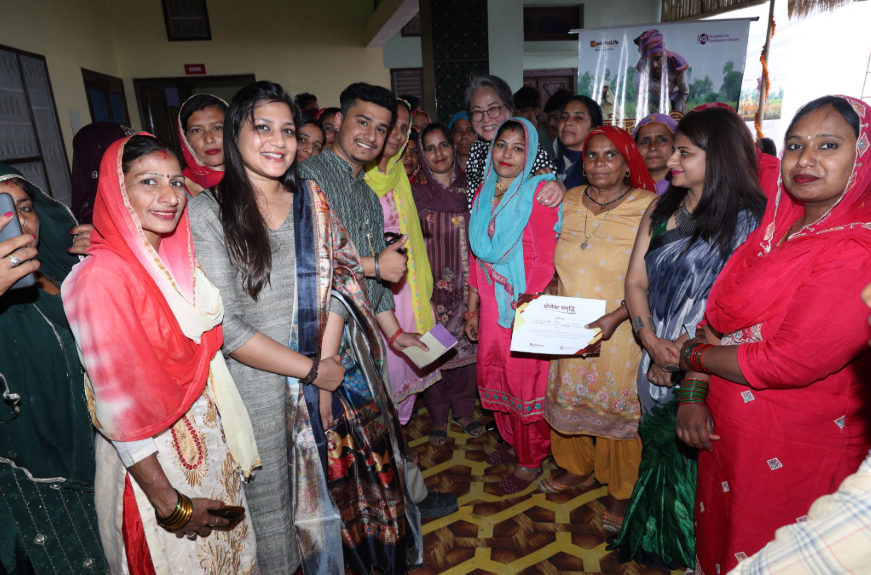
Working alongside women like Komal and Preeti, I realised that the most remarkable transformation was not in the material—it was in the confidence that grew with every successful product. Women who initially questioned whether they could work with Parali soon began suggesting new ideas, helping one another improve techniques, and taking ownership of the creative process. The Mahila Kaushal Kendra gradually evolved into a place where learning was shared, creativity was encouraged, and every achievement was celebrated together.
What makes Dalamwala special is that it reminds us that innovation doesn't always require sophisticated technology. Sometimes, it begins with observing carefully, listening patiently, and respecting the knowledge that communities already possess. The role of design, then, is not to replace traditional skills but to build upon them, creating products that are both contemporary and rooted in local craftsmanship.
Beyond product development, the initiative has also reshaped the way Parali is perceived within the community. A material once associated only with crop residue is now recognised as a valuable resource capable of creating sustainable products and meaningful livelihood opportunities. This shift in perception is perhaps one of the most significant outcomes of the journey, proving that sustainability is as much about changing mindsets as it is about developing new materials.
The story of Dalamwala continues to grow with every new product, every new technique, and every woman who joins the centre. What began as an exploration has evolved into a vibrant ecosystem of learning, production, and collaboration. It stands as a reminder that lasting change is rarely created overnight—it is built through trust, patience, shared learning, and the courage to keep experimenting.
Every visit to Dalamwala leaves me with the same thought. The products displayed on the shelves may showcase the beauty of Parali, but the real achievement lies in the confidence, resilience, and aspirations that have grown alongside them. Because behind every braid, every handcrafted piece, and every carefully finished product is a story of women who chose to see possibility where others once saw only waste
About the Author
Gaurav Khatri
Product Designer & Researcher
Foundation for Development Initiative (FDI)
Working in these villages has changed the way I look at design. I realised that the biggest challenge wasn't creating new products it was creating processes that felt natural, familiar, and empowering for the women who would make them. These stories are drawn from moments I've witnessed in the field and are dedicated to the women whose hands, ideas, and resilience continue to transform agricultural residue into products with purpose.
