
What is Stubble Burning?
Stubble burning is the practice of setting fire to leftover paddy and wheat crop residue to prepare fields quickly. It is widespread in Punjab and Haryana, with over 80 million tonnes of residue burned every year. While this saves time and cost for farmers, it severely affects the air, soil, and public health.
Why Do Farmers Burn Stubble?
Too little time. Not enough options.
How big is the crisis ?
Over 87 million tonnes of crop residue are burned annually across India
35 million tonnes of paddy stubble burned each year in Punjab and Haryana alone
37,602 official fire incidents recorded in 2024 Actual numbers may be higher — farmers often burn at times when satellites don't monitor
Madhya Pradesh recorded 16,360 cases in 2024 (a 31% increase YoY), the highest among monitored states
Uttar Pradesh and Rajasthan also saw a sharp rise in stubble-burning incidents, emerging as new hotspots
Madhya Pradesh and Rajasthan, the issue has now spread to the rabi season, with farmers burning wheat stubble as well.
Stubble burning continues to impact India at a massive scale. Once concentrated in the northwest, the problem is now expanding to new states with rising numbers and shifting patterns.
Impact on Air Quality and Public Health
During peak burning season, stubble fires contribute up to 42% of Delhi’s PM2.5 levels and 35% to overall pollution in NCR
Average PM2.5 levels rise to 193–270 µg/m³, exceeding national safe limits by over 4 times and WHO limit by over 10 times!
9 out of 10 rural households report increased respiratory issues like coughing, asthma, bronchitis during the burning season
Hospitals in North India report a 30–40% surge in cases of asthma, COPD, bronchitis and pneumonia during this time.
From villages to metros, the severe health impact of stubble burning is painfully visible...
Impact on Soil Health and Farmers
Burning destroys beneficial microbes and depletes organic carbon, reducing soil fertility and affecting long-term agricultural productivity.
| Nutrient / Property | Impact |
|---|---|
| Nitrogen & Sulphur | (90%) |
| Phosphorous & Potassium | (15–20%) |
| Soil Temperature | |
| Water Holding Capacity | |
| Carbon Sequestration |
Almost 9 out of 10 farmers report reduced crop productivity after repeated stubble burning.
Over time, burnt fields show
- Poor water retention
- Nutrient imbalance
- Reduced microbial activity
- Increased fertilizer dependency
- Decline in soil fertility
These effects reduce farmers' productivity, increase cultivation costs and deteriorate soil health over time.
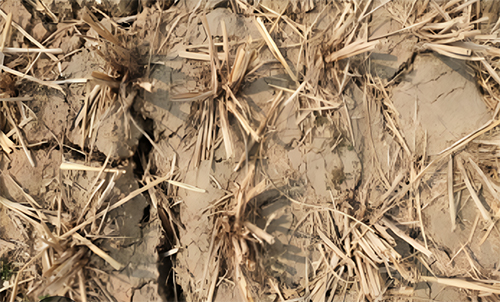
Condition of soil before burning
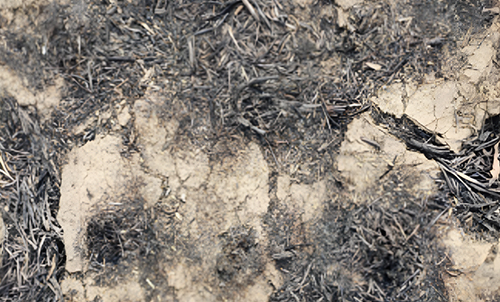
Condition of soil after burning
